❦ ❦ ❦

Carnival Dispatch

A programme of free jester games — published in Fremantle, Western Australia

The Full Programme

Five acts, reviewed after full three-week runs on our own devices

Act Title Kind of spectacle Curtain call
IThe Grand MotleyCard matchingStanding ovation
IIAct of FoolsStage-direction puzzleThree encores
IIIRingmaster's WildTurn-based ring showHearty applause
IVPantomime PairsMemory puppet showDelighted chuckles
VMidnight MarionetteRhythm waltzHushed house, then thunder
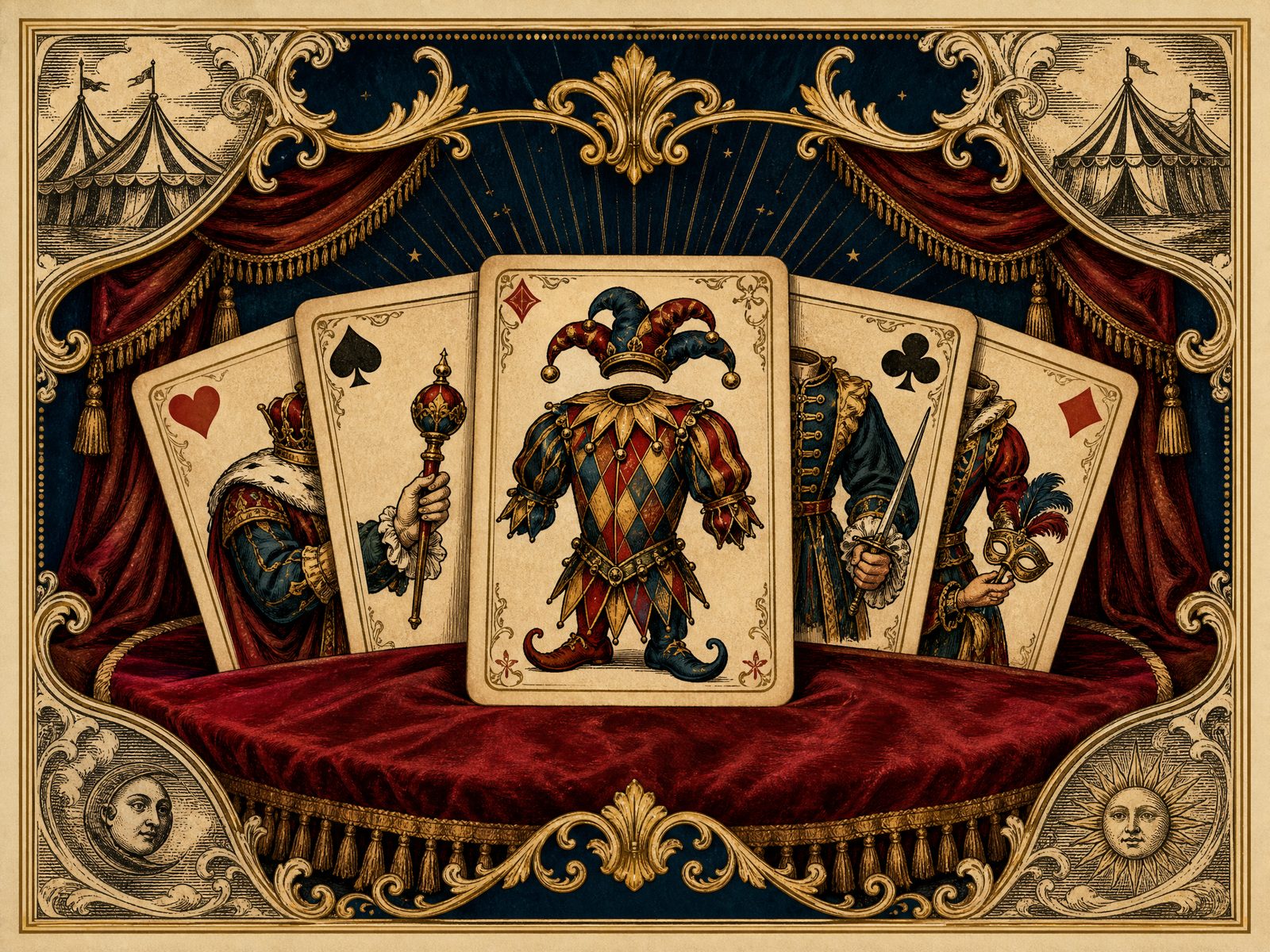
A fan of engraved playing cards with a jester costume card at centre
Act I

The Grand Motley

The premise is simple and the execution lavish. Each deal spreads a fan of engraved cards across a velvet table, and somewhere among the suits hides a scrap of the jester's coat — a diamond of cloth, a bell, a curl of collar. Match the surrounding pairs to clear the table and claim the scrap. Ninety deals later, the full costume hangs assembled in your wardrobe, and the game takes a bow.

What kept us returning was the drawing. Every card is illustrated as though pulled from a nineteenth-century printing house, and later deals introduce trick cards — mirrored courts, upside-down bells — that fooled us far more often than we care to print. The difficulty rises like a good second act: steadily, and with a wink.

The entire wardrobe, all ninety deals, and the seasonal costume galleries are free. There is nothing to buy and nowhere to buy it, which is precisely how we like our theatres.

Curtain call: rapturous — the season's standing ovation. Beatrice replayed the final deal three times purely for the flourish.
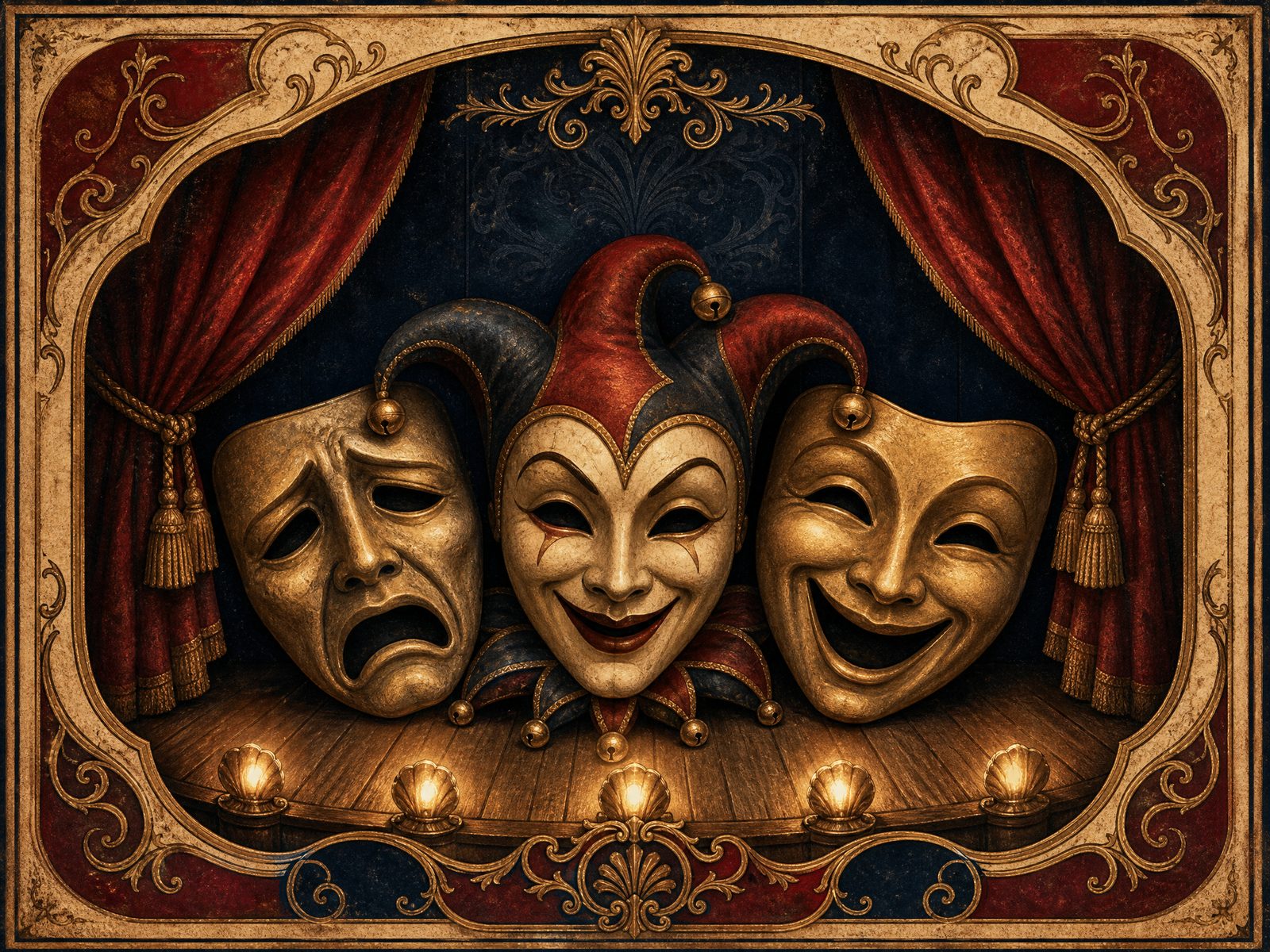
Comedy, tragedy and jester masks on a small stage
Act II

Act of Fools

Here you are the stagehand, not the star. Each level is a tiny pantomime that will go catastrophically wrong unless you arrange it properly: masks on the correct hooks, the trapdoor oiled, the limelight angled just so. Press play, and the little troupe performs your setup — flawlessly, or with spectacular slapstick failure.

The failures are, frankly, half the entertainment. A mis-hung tragedy mask sends the whole chorus into weeping fits mid-jig; a forgotten prop leaves the jester miming to an empty spotlight. The game knows its failures are funny and lets you watch them through before offering another attempt, which turns every mistake into a scene worth keeping.

One hundred and twenty scenes across five theatres, all free, with a scene-builder unlocked at the end that asks for nothing but imagination.

Curtain call: warm and long — three encores in our house, and Silas has kept the scene-builder on his phone ever since.

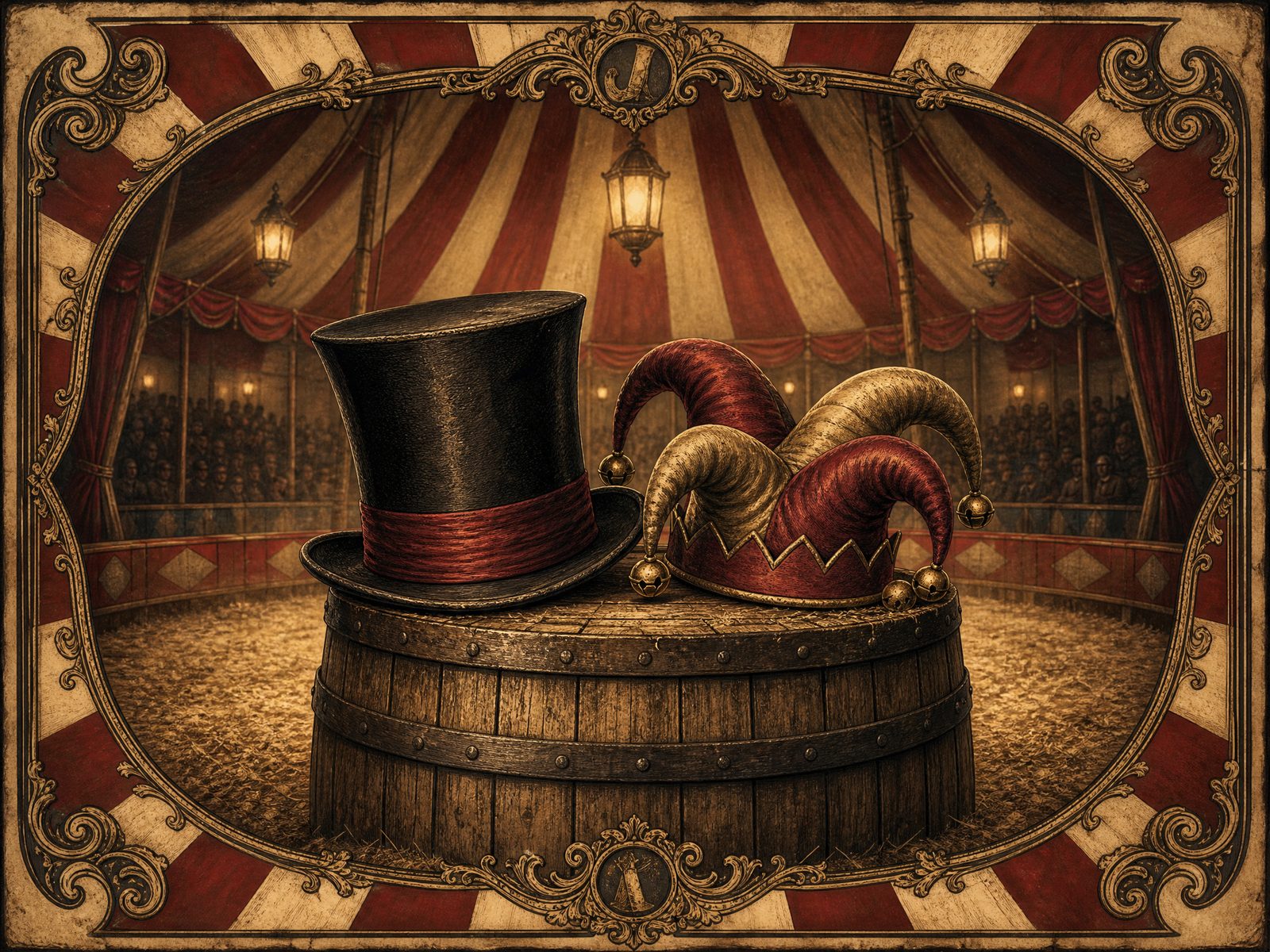
A top hat and jester cap resting together on a barrel in a circus ring
Act III

Ringmaster's Wild

A circus runs on schedules, and yours is falling apart. Each turn, acts queue for the ring — acrobats, dancing dogs, a soprano of dubious temperament — and mishaps strike without warning. Your one flexible asset is the jester: the wild card of the roster, able to fill any gap, calm any diva, and buy any act one more minute to prepare.

Spending the jester well is the whole game. Send him too early and the finale collapses; hoard him and the middle sags. We argued about optimal jester deployment over two separate dinners, which we regard as the highest compliment a turn-based game can earn.

The campaign spans forty evenings at the circus and is free from first bell to last. A daily scheduling puzzle adds one fresh headache each morning, also free.

Curtain call: hearty applause, one polite cough — the difficulty spike at evening thirty may ruffle gentler patrons.

Two mirrored jester marionettes facing each other on a puppet stage
Act IV

Pantomime Pairs

The gentlest act on the bill. A puppet stage presents marionettes two at a time, each striking a pose — a bow, a cartwheel, a dramatic faint — before the curtain drops. Your task is memory: recall which puppets struck mirrored poses and reunite them before the interval bell rings.

It sounds slight, and in lesser hands it would be. But the puppets have such character — the faint is performed with escalating melodrama each time — that remembering them becomes effortless, then joyful. Later stages add costume swaps and identical twins, and by the final theatre we were genuinely tested.

All two hundred rounds are free, and a practice stage lets you rehearse any puppet you keep confusing. We kept confusing the twins. The game was patient about it.

Curtain call: delighted chuckles throughout the stalls — the ideal act for a quiet Sunday matinee.

A lone marionette jester dancing under a full moon
Act V

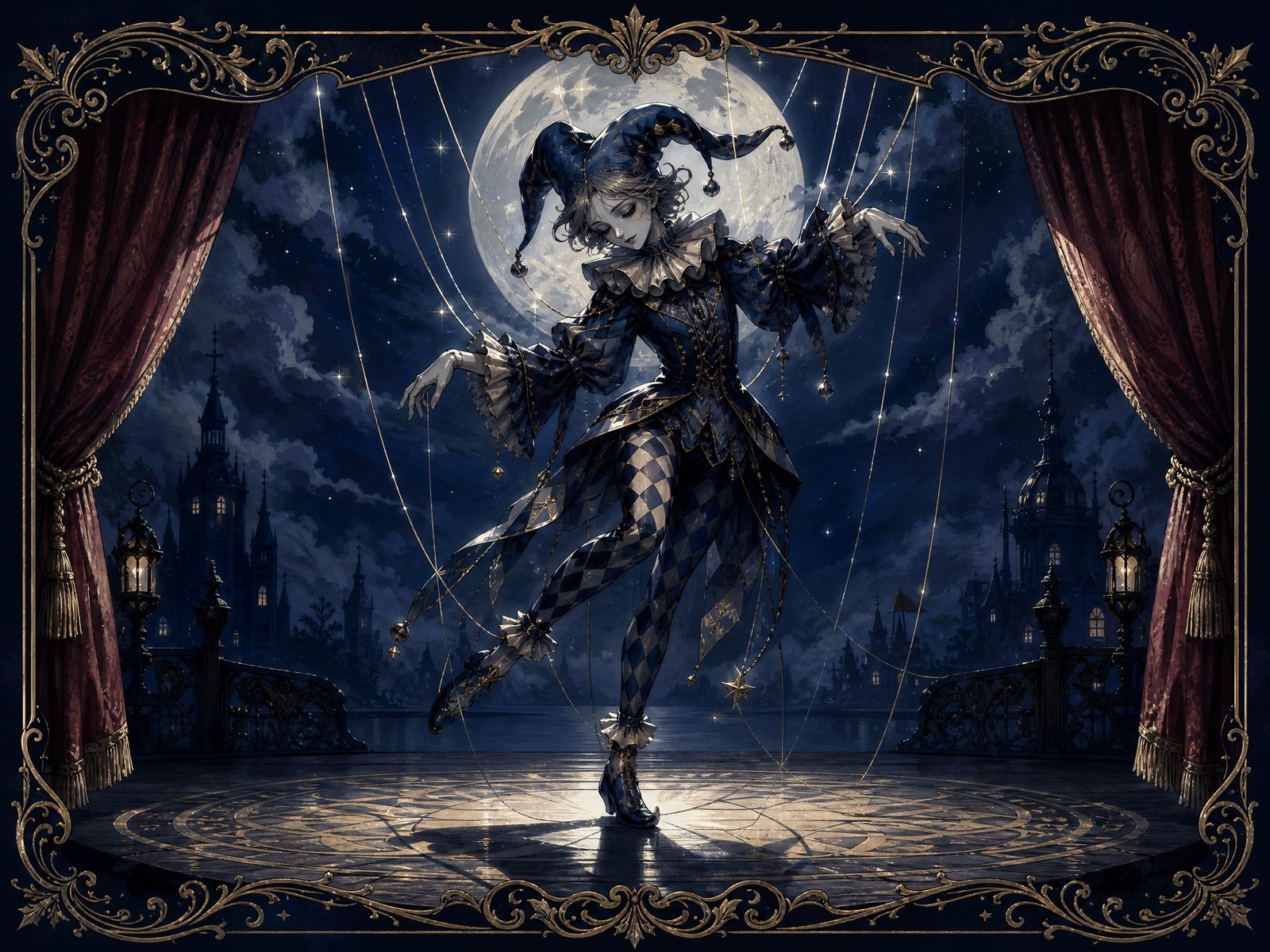
Midnight Marionette

The closer, and the reason this programme went to print a week late. A marionette jester dances alone on a moonlit stage, and you keep her dancing: taps and holds in time with a slow waltz, strings gleaming with each true beat. Miss, and she stumbles; miss twice, and the moon dims. Hold the rhythm through a full piece and the stage blooms with silver light.

The waltzes are original compositions, unhurried and melancholy, and the difficulty comes not from speed but from restraint — the game asks you to wait, and waiting well is harder than tapping fast. By the final piece we were holding our breath along with the music.

Twelve waltzes, one unlockable moonless encore, entirely free. Headphones are not required but they are, in our house, mandatory.

Curtain call: a hushed house, then thunder. Poppy declared it the act of the season, and the editors did not argue.

❦ Every act reviewed above is free to play in full — we sell nothing and take no commissions ❦